
Earth's diurnal motion

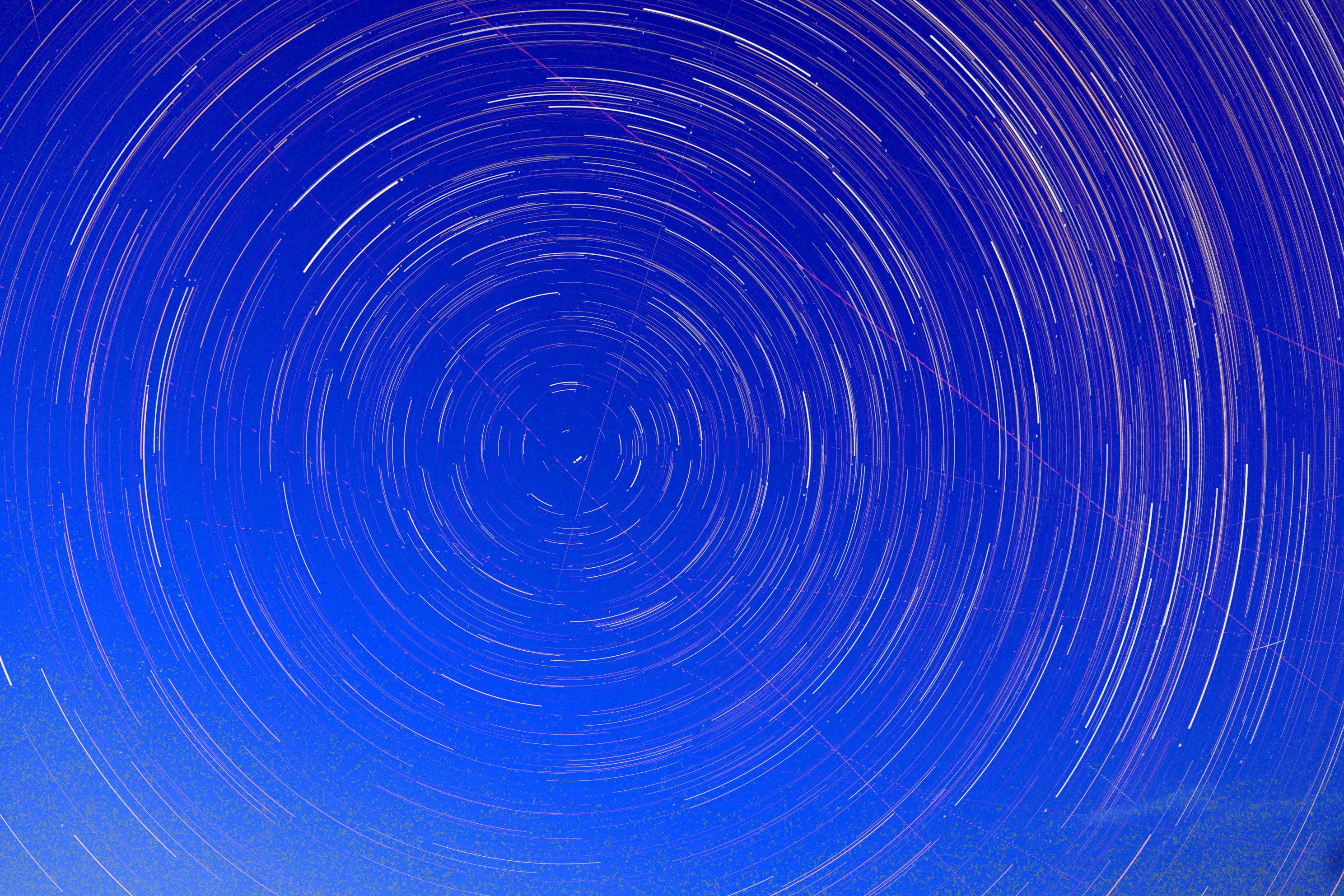
Last night I made my first attempt at a long exposure shoot aimed at Polaris. I watched a few tutorials on YT.
Using an intervalometer, I ended up with about 200 photos around 11pm.
I had never stacked photos before and StarStax made that very easy. Then I played around with it in Gimp, which I am clueless about.
So for about a 2hr long shoot at 15°/hr my camera revolved ~ 30°. And that looks about right. The length of the streaks grow longer further away from the center point but if you imagine a dart board, everything looks consistent.
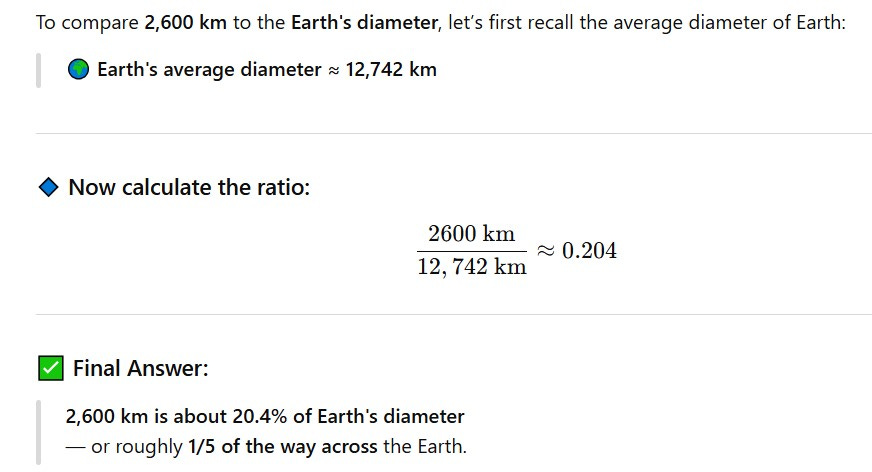
So the camera spun about 2600km during that time or the equivalent of .20 Earth diameters.
However, according to standard astronomy Earth travels more than 16 Earth diameters ~ 214,000km in 2 hrs. in its orbit around the Sun.

So plainly we can see that it doesn’t take long for a camera to detect the fact that it is in motion. Even a 5” exposure will show smearing in a star.
The camera records its own motion in the photo. If the camera were moving laterally relative to the stars, that motion would also show up in the photo.