
Axial Parallelism

When you have a faulty model you have to come up with numerous contrivances to keep it patched up.
Let’s add “axial parallelism” to the growing list.
What is it supposed to mean? It’s the Copernican’s answer to how an object orbiting a center can have its axis relative to the center change. (physically impossible with a single motion)
Let’s take a look at the computer simulation cartoon that illustrates the premise.
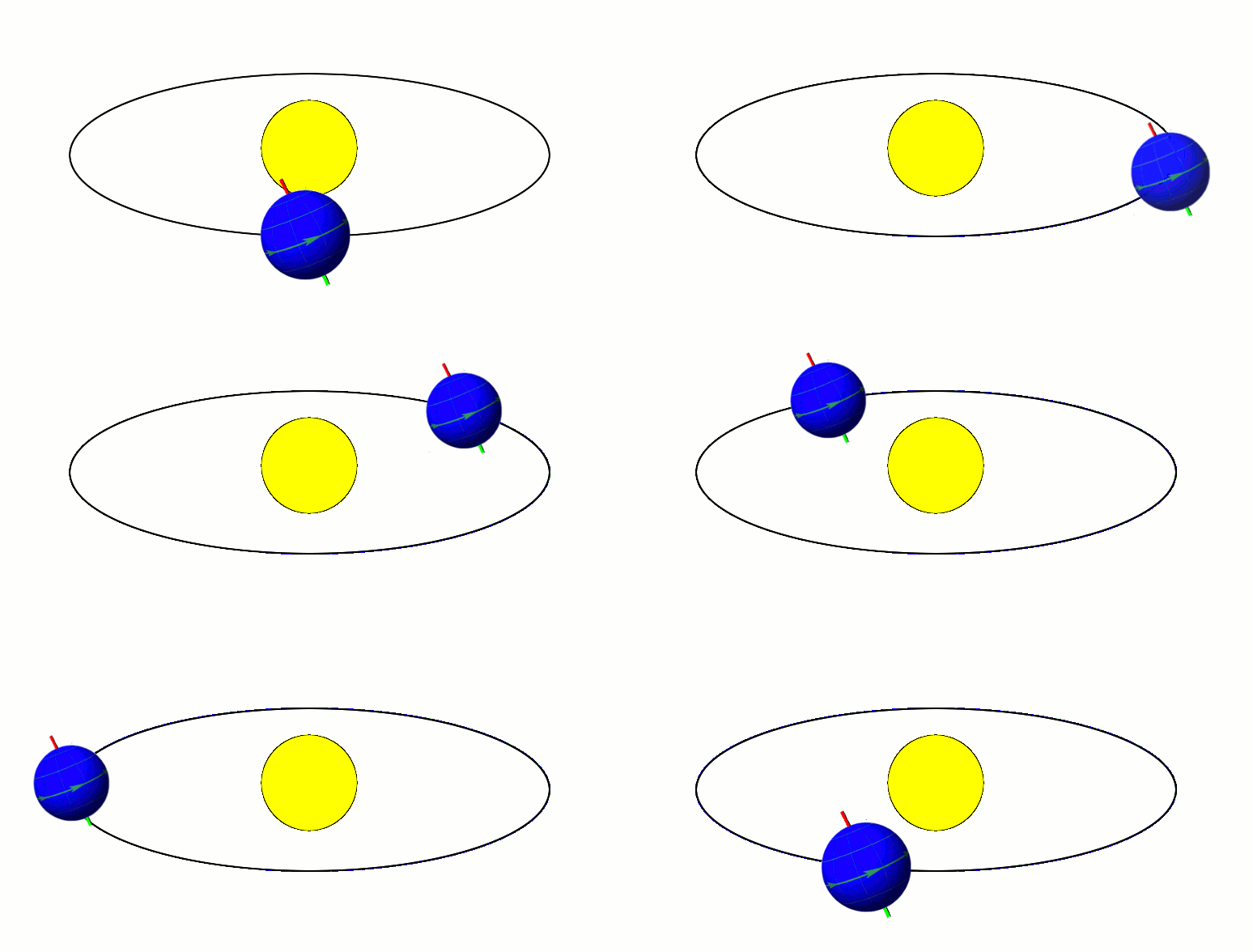
There you go, Earth’s tilt is constantly changing so that its axis remains pointing toward the same direction, parallel.
Constantly changing?!
YES.
If it was not, it would look like this.
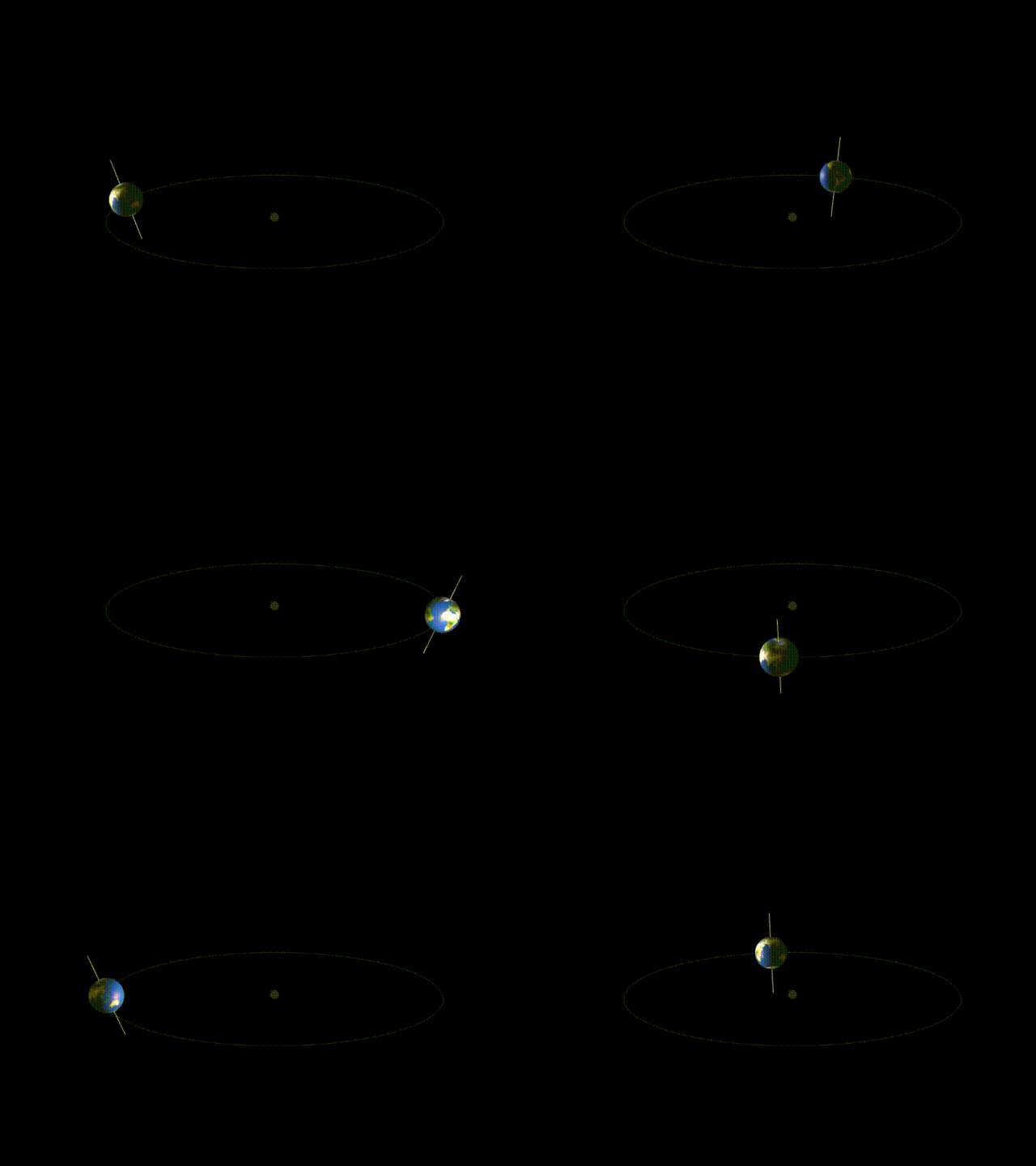
Notice that the North pole always tilts away from the center. Its orientation can never change without the introduction of a second motion.
Interestingly, AI has yet to put this sophistry into the “protected zone” and is fully transparent about the inability of axial parallelism to function with only a single motion.
I asked it to design a model to demonstrate the phenomena.
Axial parallelism requires more than one motion to keep the Earth’s axis fixed in space as it orbits the Sun.
A single motion—like just rotating the Earth around the Sun on a turntable—will rotate the axis along with the orbit, breaking parallelism.
Therefore, to physically demonstrate axial parallelism, you need at least two coordinated motions:
One to move Earth along its orbital path,
Another counter-rotation to keep the axis pointed in the same inertial direction.
Of course we will be told that practically anything can happen in “space”.
CODA
For those who are waking up to the fact that practically everything we’ve been told about astronomy for the last three hundred years or more is complete nonsense, please go check out the Tychosium the only real computer modeled orrery in existence.
Now with over 9000 stars!